
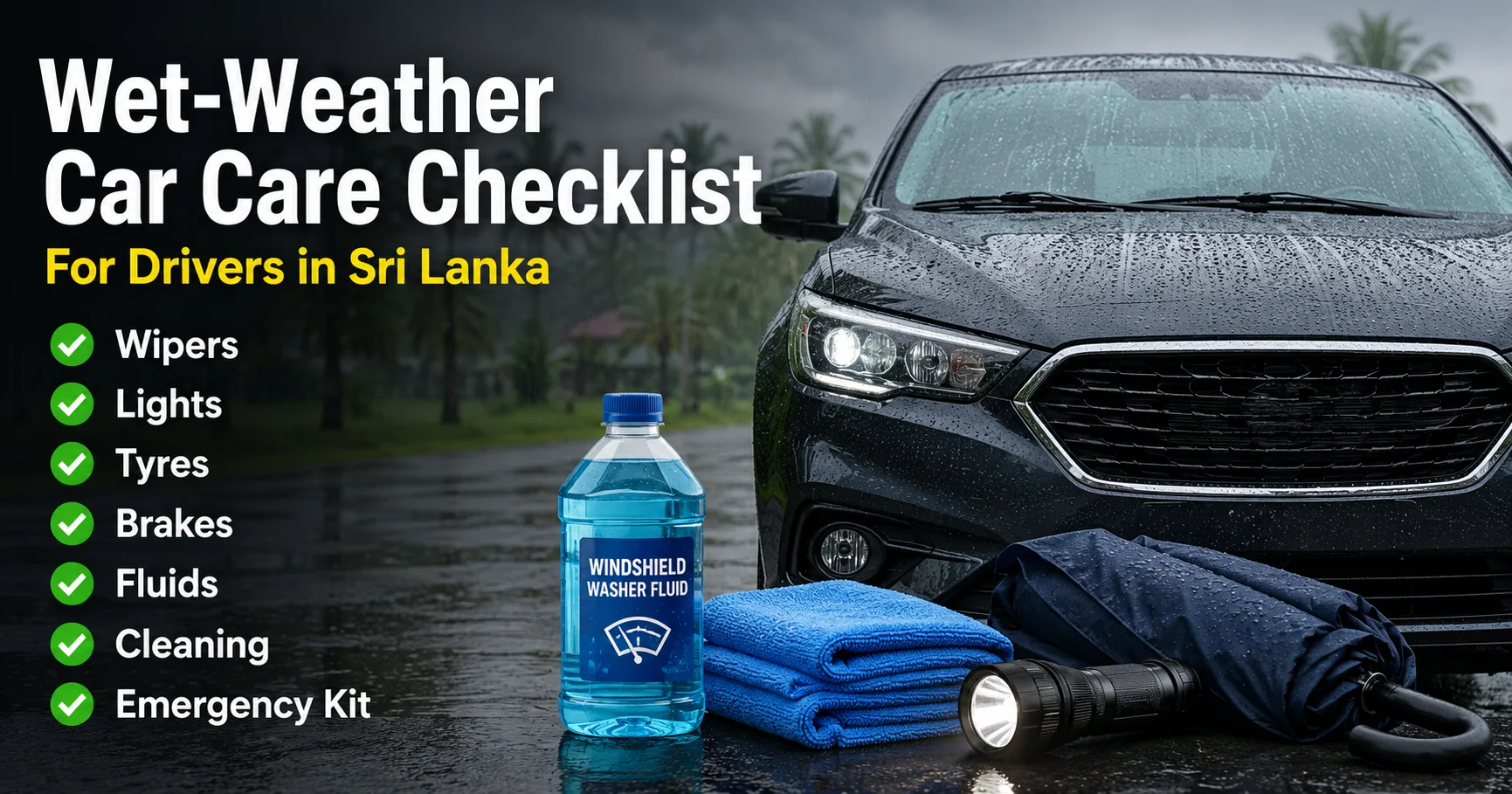
Wet-Weather Car Care Checklist for Drivers in Sri Lanka
Rain can quickly reveal problems that are easy to overlook during dry weather. Worn wiper blades, weak lights, dirty windscreens, poor tyres and water entering the interior can all make wet-weather driving more difficult.
A short inspection before a rainy journey can improve visibility, reduce avoidable problems and help you identify maintenance work that requires a mechanic.
1. Inspect the windshield wipers
Wipers should move smoothly and clear water without leaving large streaks or unwiped areas. Replace or inspect the blades when you notice:
- Cracked, hardened or separated rubber
- Streaking across the windscreen
- Skipping or chattering movement
- A section of the glass that is not being cleared
- A loose or damaged wiper arm
Make sure you purchase the correct blade size and attachment type for the vehicle. The driver and passenger sides can use different blade lengths, while the rear window may require another size.
Browse windshield wipers and washer products on Tudo.lk.
2. Test the washer system
Check that the washer jets spray correctly and that the fluid reaches the areas cleared by the wipers. A blocked nozzle, empty reservoir or weak pump can make it difficult to remove mud and road spray.
Use a cleaning product designed for vehicle windscreens where appropriate. Household detergents may leave residue or may not be suitable for vehicle paint, rubber and washer-system components.
Clean the inside of the windscreen as well. Dust, fingerprints and oily residue can increase glare and reduce clarity when light reflects through rain.
3. Check every exterior light
Good lighting helps you see the road and allows other drivers to identify your vehicle. Test:
- Low-beam and high-beam headlights
- Front and rear indicators
- Brake lights
- Tail lights
- Reverse lights
- Fog lights, where fitted
- Number-plate lights
Replace failed bulbs with the correct type and rating. A brighter-looking bulb is not automatically suitable for the lamp housing or electrical system. Incorrect products or installation can create glare, overheating, warning lights or unreliable operation.
Complex lighting and electrical repairs should be completed by a qualified auto electrician.
Explore automotive lighting and electrical accessories.
4. Examine the tyres
Tyres must remove water from the contact area while maintaining grip. Check all four tyres and the spare for:
- Visible tread wear
- Uneven wear across the tyre
- Cuts, cracks, bulges or embedded objects
- Incorrect pressure
- Signs of slow air loss
Use the vehicle manufacturer’s recommended tyre pressure rather than the maximum pressure printed on the tyre sidewall. Tyre pressure should be checked when the tyres are cold where practical.
Ask a qualified tyre specialist to inspect tyres when wear is uneven or damage is visible. Uneven wear can also indicate an alignment, suspension or inflation problem.
5. Pay attention to the brakes
Do not ignore unusual brake sounds, vibration, pulling, a soft pedal or an illuminated warning light. Wet conditions can increase the distance required to stop, so an existing brake problem becomes particularly concerning.
Brake inspection and repair should be completed by a qualified technician. Do not rely on replacing a visible component without checking the complete braking system.
6. Check essential vehicle fluids
Inspect fluid levels according to the owner’s manual. Depending on the vehicle, this may include:
- Engine oil
- Coolant
- Brake fluid
- Transmission fluid
- Power-steering fluid
- Windshield washer fluid
Do not add an unknown fluid simply because the colour appears similar. Use the exact specification required for the vehicle and investigate any repeated drop in fluid level.
Rain does not by itself mean that you should change to a different engine-oil viscosity. Continue following the vehicle manufacturer’s recommended viscosity, performance specification and service interval.
Compare current motor-oil listings on Tudo.lk.
7. Protect the exterior
Mud, road film, bird droppings and other contamination can remain on the paint after wet journeys. Wash the vehicle using products intended for automotive surfaces and avoid scrubbing dry dirt across the paint.
A basic exterior-care kit can include:
- Automotive shampoo or suitable cleaner
- Wash mitt or soft sponge
- Separate wheel-cleaning tools
- Microfibre drying towels
- Glass cleaner
- Wax, sealant or another compatible protective product
Clean around wheel arches and areas where mud collects. If you use a pressure washer, maintain a suitable distance and avoid directing concentrated pressure at damaged paint, electrical connectors, seals or delicate components.
Browse exterior vehicle-care products.
8. Keep the interior dry
Wet umbrellas, shoes and floor mats can introduce moisture into the cabin. Persistent moisture can lead to unpleasant odours, misted windows and damage to carpets or trim.
- Remove and dry wet floor mats.
- Check door and boot seals for visible damage.
- Do not leave wet cloths or umbrellas inside the vehicle.
- Clean water spills promptly.
- Investigate repeated water entry rather than covering it with another mat.
If the windows mist frequently, clean the inside glass and use the vehicle’s ventilation or demisting system correctly.
9. Prepare a practical emergency kit
A compact wet-weather kit can include:
- Working torch with spare batteries or charging cable
- Reflective warning triangle
- Basic first-aid kit
- Phone charging cable or power bank
- Microfibre cloth
- Umbrella or raincoat
- Basic tool kit suitable for the vehicle
- Emergency contact and roadside-assistance details
Store items securely so they do not move around the cabin or become hazards during sudden braking.
Quick wet-weather inspection
| Item | Check | Action |
|---|---|---|
| Wipers | Streaking, cracks or skipping | Clean, inspect or replace with the correct size |
| Washer system | Fluid level and spray pattern | Refill correctly and clear faults |
| Lights | All exterior lights operate | Use compatible replacements or an auto electrician |
| Tyres | Tread, damage and pressure | Inflate correctly or obtain professional inspection |
| Brakes | Noise, vibration, pulling or warning light | Arrange a qualified brake inspection |
| Interior | Wet mats, leaks and misted glass | Dry and investigate the source of moisture |
Shop car-care products online in Sri Lanka
Tudo.lk offers automotive categories covering wipers, lighting, vehicle-care products, motor oils and general car accessories. Check compatibility, seller details, warranty information, stock and delivery options before ordering.
Prepare your vehicle for wet weather
Browse current car accessories and maintenance products available from sellers on Tudo.lk.
Frequently asked questions
When should windshield wipers be replaced?
Inspect or replace them when the rubber is damaged or when they leave streaks, skip, chatter or fail to clear part of the windscreen.
Should I change engine oil because of the rainy season?
Rain alone is not a reason to change viscosity. Follow the grade, performance specification and service interval recommended by the vehicle manufacturer.
Can I install brighter LED bulbs in any car?
Not automatically. The bulb, lamp housing, electrical system and road-use requirements must be compatible. Seek advice from a qualified auto electrician when uncertain.
What should I do if water enters the vehicle?
Remove and dry wet materials, identify the entry point and arrange repairs. Persistent water entry can affect carpets, trim and electrical components.
Where can I buy car-care products online in Sri Lanka?
Tudo.lk provides categories for vehicle-care products, wipers, lighting, motor oils and car accessories. Review current availability and compatibility before ordering.
Disclaimer: This checklist provides general information and does not replace a professional vehicle inspection. Safety-critical systems such as brakes, tyres, steering and vehicle electrics should be inspected by qualified professionals.
